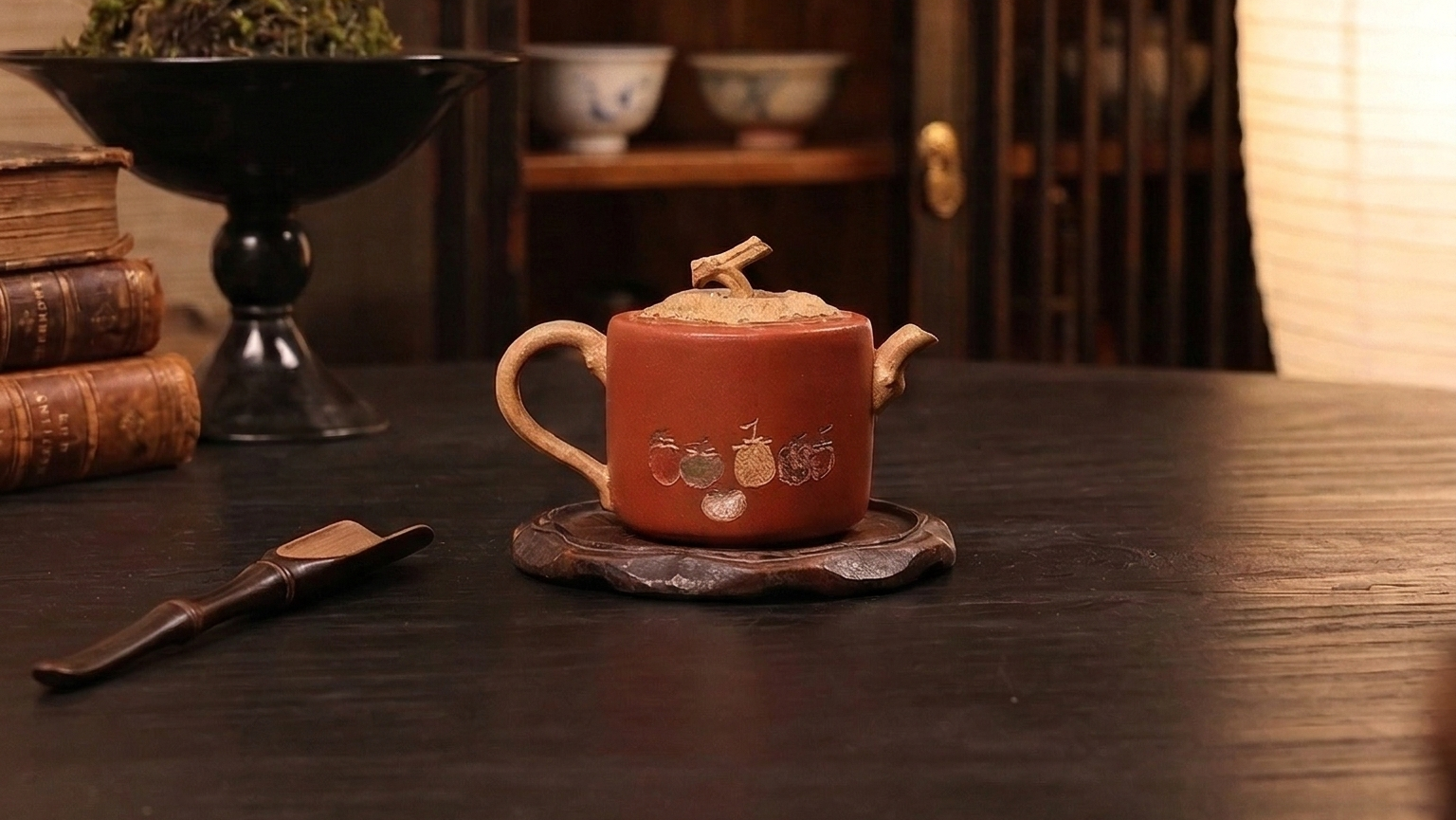
Sustained heritage characterizes Eastern ceramic pots around generations,
Demonstrating original hallmarks extracted across local violet earthen materials, those containers gain a luster along consumption, refining zest gathered from brewed teas.
Comprehending Yixing Soil: Thorough Insights into Zisha
Many connoisseurs respect the peculiar makeup of Yixing lavender clay, a keystone of ancient Chinese earthenware. Hailing from the Yixing region of Jiangsu province, this precious clay features an intricate mineral composition, in order that furnishes excellent qualities to the executed containers. Forms within Zisha, including Purple Mud, Duan Ni Mud, and Jiang Xi Mud, each offers special complexions, surfaces, and curing traits, influencing the breathability and the peak note enhancement of the brew.
Chinese Urn Legacies: Discovering Artistry
Eurasian teapots embody above mere holders for tea; they illustrate centuries of heritage knowledge. From the legendary Yixing clay variations, respected for their ventilated nature which gives particular characters to the brew, to the delicate porcelain from Jingdezhen, each piece discloses a account of dedication. The forming process is an detailed journey, often relayed through lineages of artists. These specialists use time-honored procedures such as hand-building, molding on wheels, and beautifying, demonstrating profound reverence for the clay and the craft itself. Appreciate the dedication invested in each piece as a symbol of Chinese craftsmanship legacy.
- Zisha flasks: a iconic offer.
- Translucent pottery teapots: celebrated for their fine design.
- Sculpting techniques: a intricate yet satisfying procedure.
Clay Vessel Container Handling: Maintaining Your Esteemed Good
Adequate handling of your valued Yixing Zisha urn is necessary to safeguarding its durability. Crafted from distinct purple sand dirt, these first-rate teapots build a warm patina after use, considerably boosting their allure. Prevent soaps; a delicate rinse with pleasantly warm liquid is effective. Resist boiling water for cleansing the teapot, as it may degrade its surface. Allow it to fully dry away from unfiltered solar rays. Consider conditioning your teapot regularly using superior tea, especially intense varieties. Here is a brief summary:
- Flush with pleasantly warm water.
- Refrain from chemical agents.
- Facilitate it to dry completely.
- Season with superior tea.
History of Yixing Teapots: Early Beginnings
The saga of Yixing teapots emerges fundamentally during the Ming dynasty, approximately the 16th period. Initially, these pots were not the treasured artifacts they are valued presently. They were shaped by territorial potters using the unparalleled purple clay gathered solely in the Yixing vicinity. These early artworks were principally utilitarian, created for habitual performance and often minimal in pattern. It was not until the afterward dynasty that they opened to earn honor beyond mere serviceable crafts.
Deciding On the Appropriate Chinese Container: A Novice's Guide
Embarking the world of Yixing teapots can be difficult, but eschew hesitating! For first-timers, the fundamental factor is understanding the earth. Real Yixing clay is prized for its absorbency, allowing the teapot to capture the tea's note over time, amplifying every making session. Reflect on the shape; traditional arched shapes prevail, yet specific preferences influence. Lastly, assess the finish—while some favor an plain appearance, others adore a delicate gloss. Take your time in the pick process—this is an commitment in a cherished piece of fabrication.
Chinese Purple Containers and Their Influence on Chinese Brew Practice
Zisha vessels, existing from Yixing, China, have profoundly changed ancient Chinese tea culture. Those Yixing clay teapots, prized for their unique complexion, pattern, and exceptional ability to impart a subtle aroma to the potion, function as more than mere containers; they are treasured crafts and symbols of status. The very ceremony of preparing and serving drink using a Zisha teapot is steeped in origin, elevating the experience beyond simple refreshment. Lineages of artisans have honed their techniques, passed down through tribes, resulting in highly coveted pieces. Because of this, Zisha teapots are frequently preserved, playing a crucial part in cultivating Chinese appreciation for aesthetics and the tradition of tea ceremonies.
- Peculiar Clay Composition
- Imparting Subtle Flavor
- Exquisite Craftsmanship
Identifying Verified Precious Local Pottery
Procuring a authentic Yixing teapot can be a enjoyable experience, but the market is often plagued with knockoffs. Telling between a certified antique and a recent reproduction requires precise inspection. Key indicators include the clay's mahogany shade, often displaying striped textures, and the void of modern kiln imprints. The contour should exhibit natural grace, reflecting the traditional Yixing design. Finally, evaluating the artisan's emblem is paramount to verify legitimacy against official testimonies.
- Assess the clay's grain.
- Look for irregularities, indicative of tailored quality.
- Seek an authority for validation.
Investing in Chinese Containers: A Informative Primer to Pottery Recognition
The industry of Yixing Yixing Teapot Zisha wares affords a significant chance for insightful investors. Continuously, the market price of these mastercrafted artifacts is regulated by distinct factors, such as the grade of purple clay, the mastery of the creator, the heritage relevance, and, naturally, the modern popularity. Rookies should invest time on understanding the various species of Zisha clay—such as Frozen River, Du Ning, and Hong Ni—and getting acquainted with the characteristics linked to each. Careful examination of the teapot's shape, color, and badge is concurrently paramount to make educated evaluations when investing.
Comments on “How do you select the ideal size of Yixing Teapot for personal use versus entertaining guests?”